
From Missing & Damaged Teeth to a Fully Restored Smile
The Situation
Dental implants are one of the most effective ways to replace missing or failing teeth. This case shows how a full restoration can improve not just function, but confidence and quality of life.
The Patient’s Concern
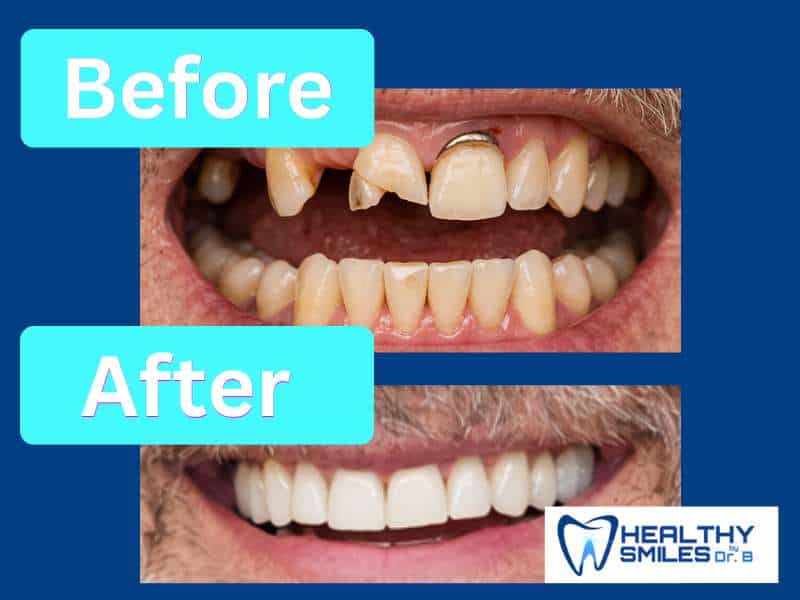
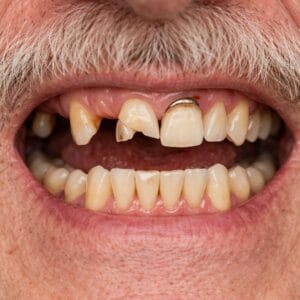
This patient came in with a mix of issues, not a complete loss of teeth, but enough damage to affect both function and confidence.
- A broken lateral incisor
- A missing premolar
- An older crown beginning to fail (with metal showing at the gumline)
- Early bone loss around the front teeth
He could still eat, but it wasn’t comfortable.
And smiling? That had become something he avoided.
Our Approach: Implant-supported bridge with natural abutments
After a comprehensive evaluation, we recommended keeping sound and healthy teeth and replacing others with a bridge supported by implants.
This approach:
- Several natural teeth were still strong enough to keep
- The damage was localized, not total
- A conservative, strategic approach made more sense
The Results
The transformation was both functional and aesthetic.
- A complete, natural-looking smile
- Strong, stable bite
- No visible metal or failing restorations
- A result that looks like his smile, just healthier

Treatment Timeline
- Consultation and planning
- Implant placement
- Healing and final restoration
(Typically completed over several months, depending on the case)
Is This Right for You?
You may be a candidate for dental implants if you:
- Have missing or failing teeth
- Wear dentures and want a more stable option
- Want a long-term solution for your smile
FAQs About Dental Implants
How long do dental implants last?
With proper care, dental implants can last decades.
Are dental implants painful?
Most patients report minimal discomfort, similar to other dental procedures.
How much do dental implants cost?
Costs vary based on the number of implants and complexity. A consultation is the best way to determine your options.